 Portrait Union
AI Samurai Portrait Generator
Become an honorable warrior in Edo-period art
Updated 13 October 2026 · First published 3 September 2026
Free preview — become a warrior
Samurai Warrior paints a person or a pet as an Edo-period warrior in lacquered ō-yoroi or dō-maru armour, laced with coloured silk, often under a crested kabuto, with a katana at the left hip and mist, cherry blossom or temple architecture behind.
The Samurai Warrior style works from two real armour constructions rather than from a costume-shop idea of one. Ō-yoroi is the heavy, box-shaped armour of the mounted archer; dō-maru wraps the torso and closes at the side. Both are built from lacquered iron plates laced together with coloured silk odoshi, usually under a crested kabuto helmet, and the katana is worn edge-up at the left hip. The face in the photograph is carried over rather than reimagined. Behind it the background is mist, cherry blossom or temple architecture, and armour colour, ornament and setting change with every generation. A dog or a cat gets the same armour fitted to a four-legged body, with plates, crests and lacing sized to the animal instead of to a person. The whole image is rendered as an oil painting with warm chiaroscuro, and previews are free and watermarked.
The model is instructed to keep the face, the markings and the expression from your photograph. The free watermarked preview is where you decide whether it did, before anything is paid for.
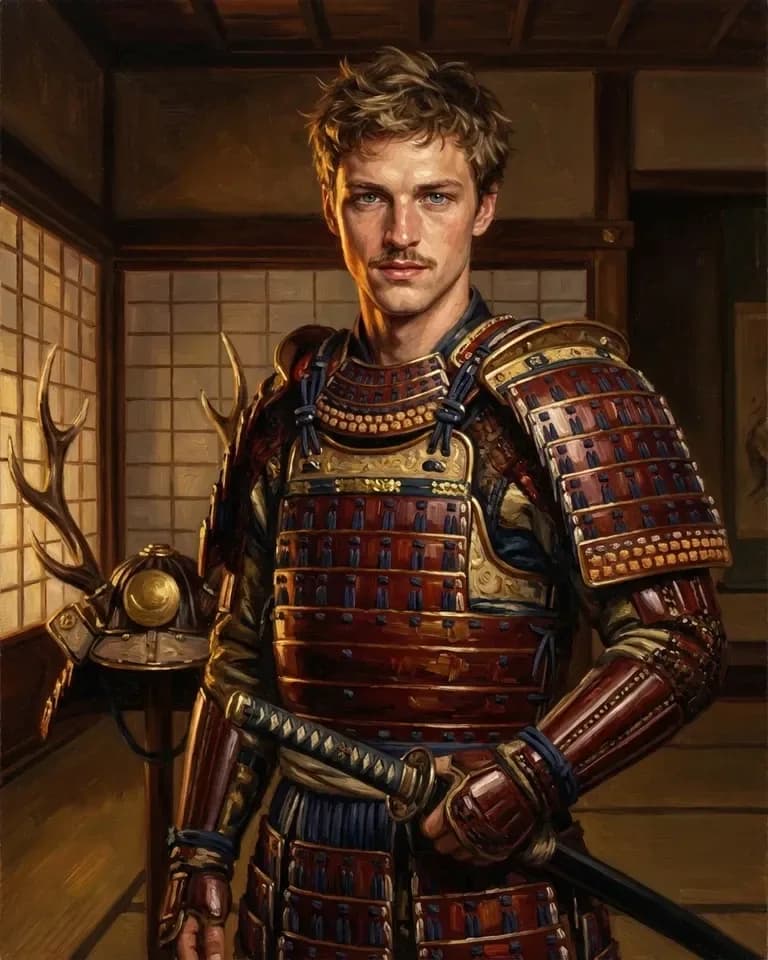
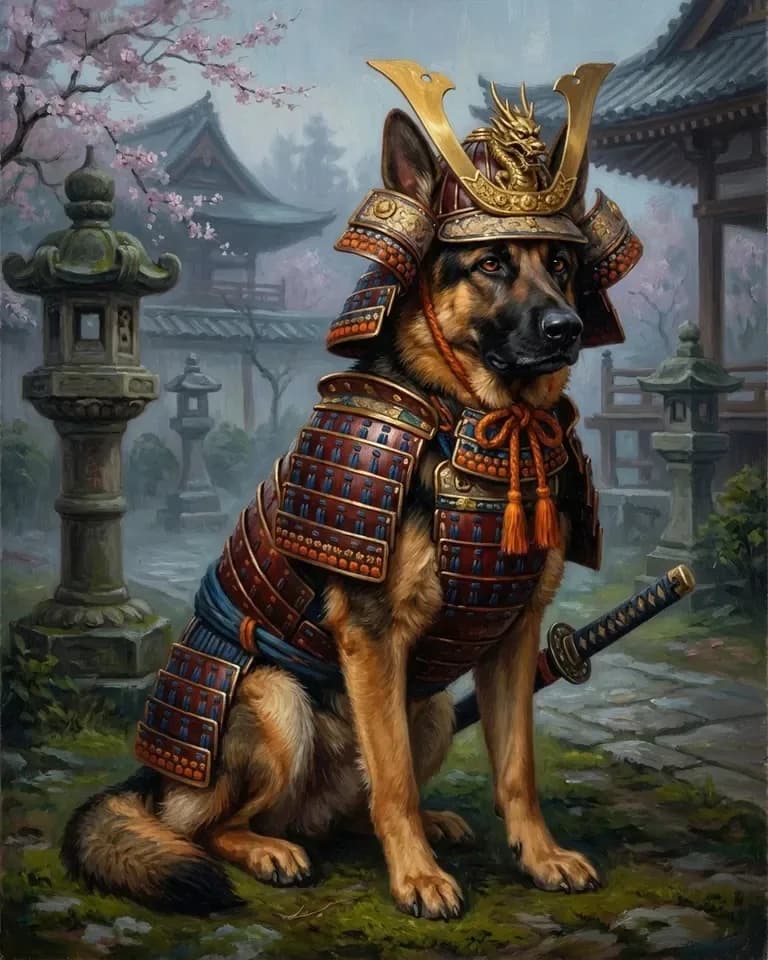
What the Samurai Warrior style does to a photo
The Samurai Warrior style paints your photo as an Edo-period warrior portrait with lacquered armour, silk lacing and a katana at your side, set against misty Japanese landscapes with cherry blossoms.
Each portrait is rendered as a traditional oil painting with warm chiaroscuro lighting. The armour design, colour palette and background vary with every generation, making each portrait unique.
It works for humans and pets alike. Pets get armour plates fitted to their natural body, with decorative crests and silk lacing. It suits dogs and cats especially well.
It suits martial arts enthusiasts, fans of Japanese history, gifts for friends with samurai-themed interests, and dog owners who want their companion painted as a guardian warrior. The combination of dignified pose, period-inspired armour and atmospheric backgrounds makes these portraits striking on a wall. Sizes, canvas construction and delivery times are on the canvas print page.
What you get
Period armour
O-yoroi and do-maru armour styles with lacquered plates and silk lacing
Japanese atmosphere
Cherry blossoms, mist, temples and traditional landscapes
Unique each time
Armour design, colours and background change with every generation
Pets and humans
Works with any subject: human warriors and pet samurai alike
The preview is free. Upload one photo, choose a style, and look at the watermarked painting before you decide whether to keep it.
Painted from photographs like yours
Every portrait and every restoration here is made by an image model working from the photograph it is given, not painted by a person at an easel. These are samples, not customer work.
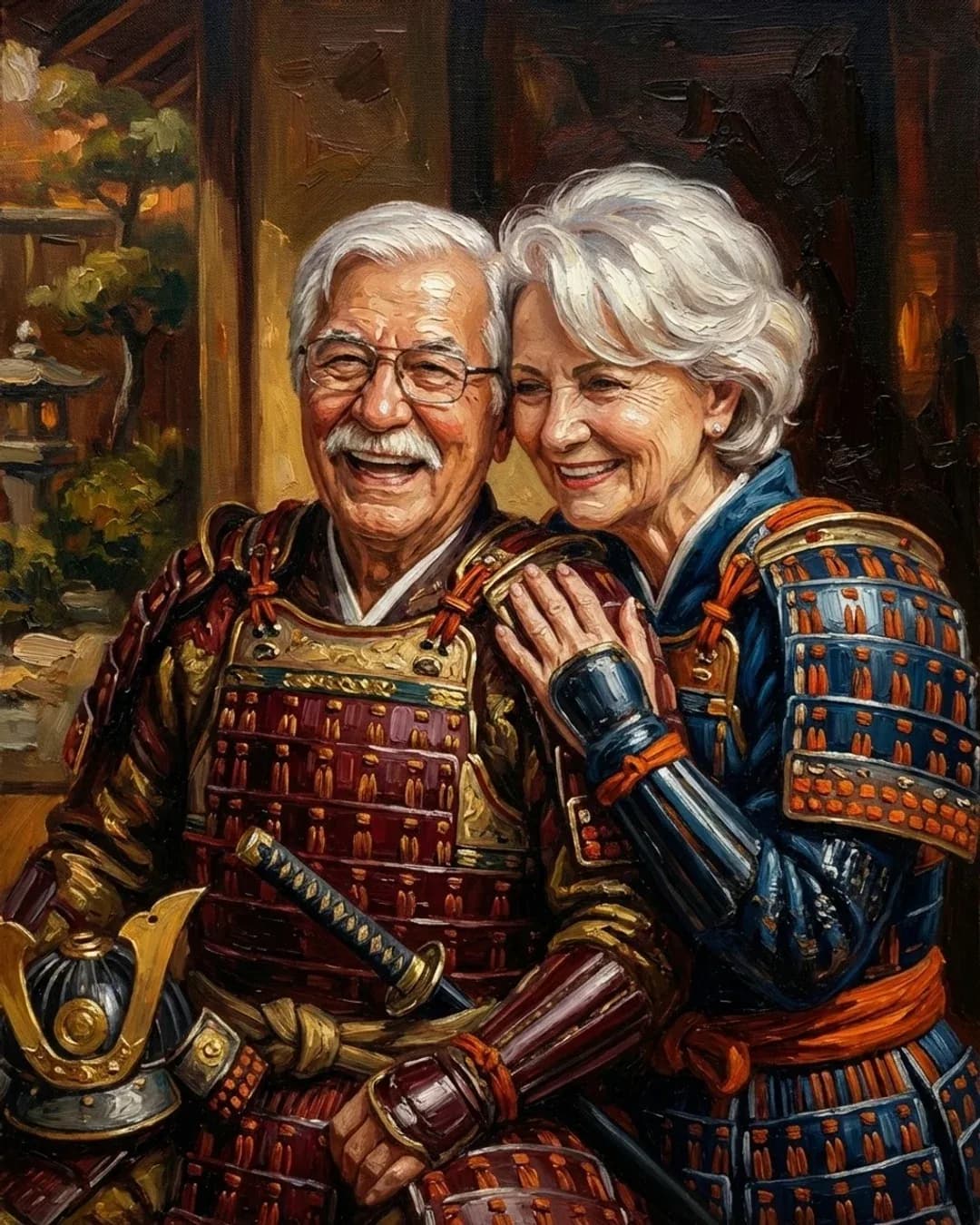
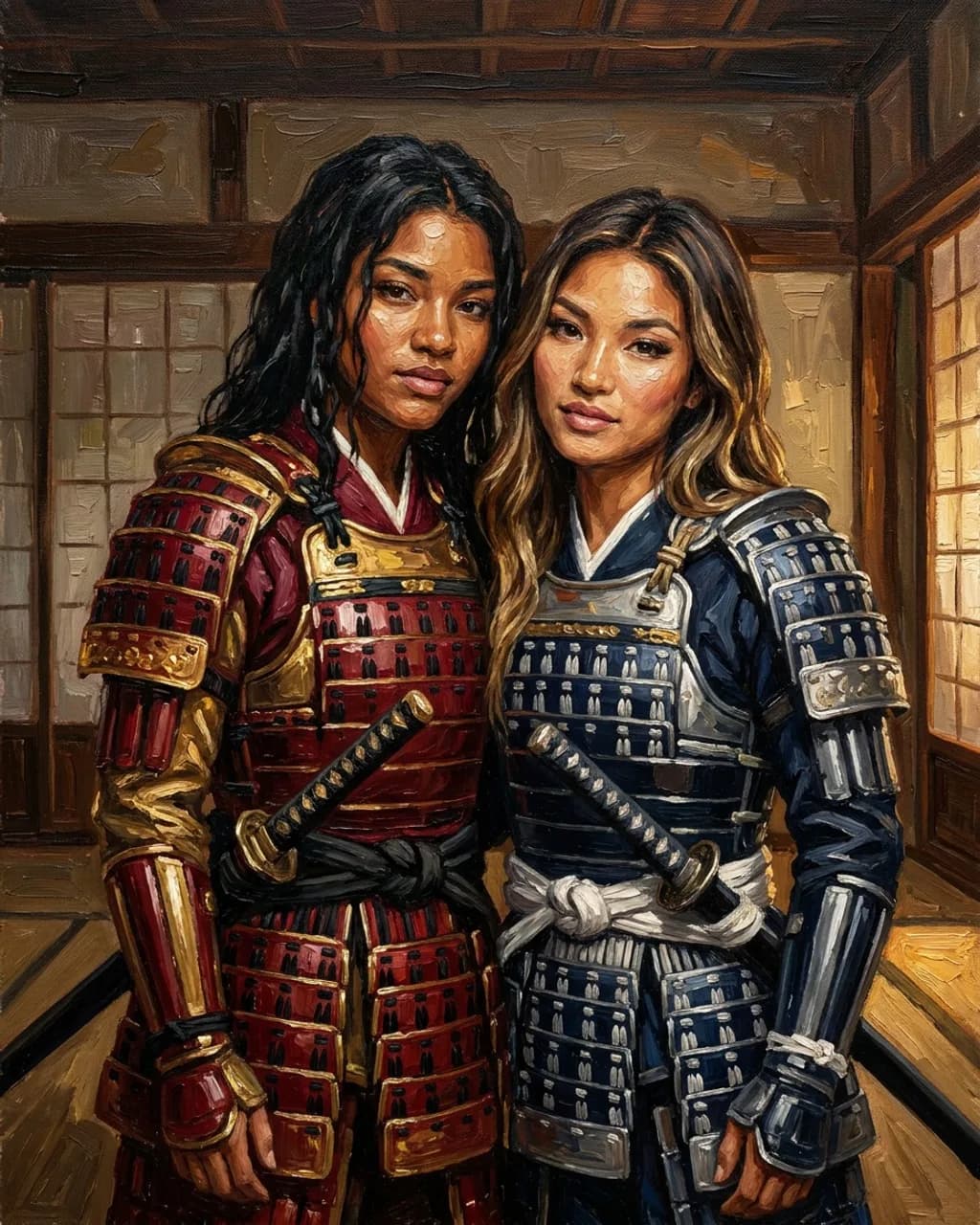
Where does the samurai portrait tradition come from?
Samurai portraiture in Japan flourished during the Edo period (1603–1868), when the samurai class was at the height of its political and cultural power. Two parallel traditions developed. One was the formal painted portrait, often hung in a family shrine after the subject's death. The other was the more popular ukiyo-e woodblock print by masters like Utagawa Kuniyoshi and Tsukioka Yoshitoshi, which depicted real and legendary warriors in dramatic battle scenes.
The visual conventions are precise. O-yoroi (great armor) and dō-maru (body-wrapped armor) styles feature lacquered iron plates laced together with colored silk cords (odoshi), often topped with elaborate helmets bearing family crests (mon). Background imagery typically includes cherry blossoms (a symbol of impermanence and warrior honor), pine trees, mist, and temple architecture. The katana — worn edge-up at the left hip — and the wakizashi short sword complete the warrior's silhouette.
Portrait Union's Samurai Warrior style draws from both traditions: the formal dignity of Edo-period portraiture and the dynamic composition of ukiyo-e prints. Generated portraits feature historically-inspired armor, accurate weapon placement, and atmospheric Japanese backgrounds — applied while preserving the subject's exact face, breed, and expression.
Sources: Samurai (Wikipedia) · Japanese armour — Tokyo National Museum · Ukiyo-e woodblock prints (Wikipedia) · Edo period art — The Met
What does a samurai portrait cost?
The digital file is €4.99, and a gallery canvas starts at €69.99 with shipping included. No packs, no credits, no subscription: you see a free watermarked preview first and pay only if you want to keep it.
| Product | What is included | Price |
|---|---|---|
| Gallery canvas | Portraits print at 20×25, 40×50 or 60×75 cm; restorations add the 2:3, 3:4, landscape and square sizes. Shipping and the digital file included. | from €69.99 |
| Framed canvas | Portraits print at 20×25 or 40×50 cm; restorations add the 2:3, 3:4, landscape and square sizes. Black, Dark brown, Natural wood frame, ready to hang, shipping and the digital file included. | from €129.99 |
| Digital portrait | One file, 2048 × 2560 px, without watermark | €4.99 |
Prices shown in EUR. In the UK a digital portrait is £3.99 and a canvas starts at £59.99; in the US, Canada, Australia, New Zealand, Japan, Singapore and Korea they are $4.99 and $79.99. The preview page charges in your own currency automatically.
Frequently asked questions
Does the armour look authentic?
The armour follows historical o-yoroi and do-maru forms: lacquered plates, silk lacing and decorative crests. It is inspired by the period rather than a museum reconstruction.
Can my pet be a samurai?
Pets get armour plates fitted to their natural body. Dogs and cats make striking samurai.
What's in the background?
Japanese-inspired settings: misty landscapes, cherry blossoms, temples and atmospheric scenes. The background varies with each generation.
What photo works best for a samurai portrait?
A well-lit, head-on photo with the subject facing the camera works best. Use an upright photo with the subject in the middle: the picture is centre-cropped to 4:5 before painting, so wide photos lose their edges.